The horror genre has always thrived on unsettling imagery, psychological tension, and the fear of the unknown. Few things are as inherently disturbing as something meant to be innocent—like a doll—turned into a source of terror. The 2025 horror film Dolly, directed by Rod Blackhurst, leans heavily into this idea. With its grim tone, brutal violence, and clear inspiration from classic exploitation horror, the film attempts to deliver a disturbing survival story set in a bleak and isolated world. While it may not completely reinvent the slasher formula, Dolly offers a raw, unsettling experience that horror fans—especially those who appreciate gritty throwback cinema—may find hard to forget.
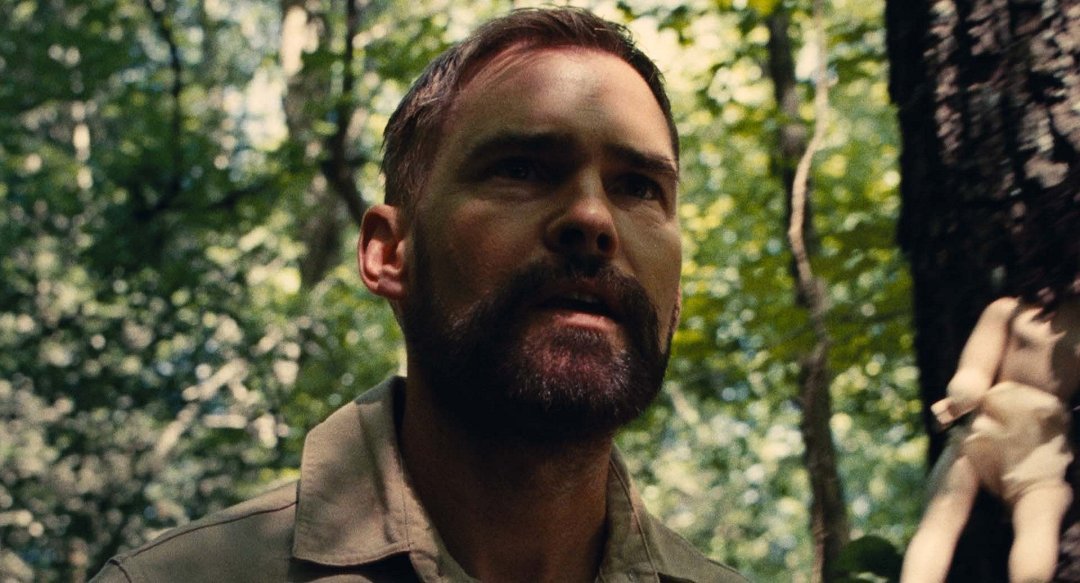
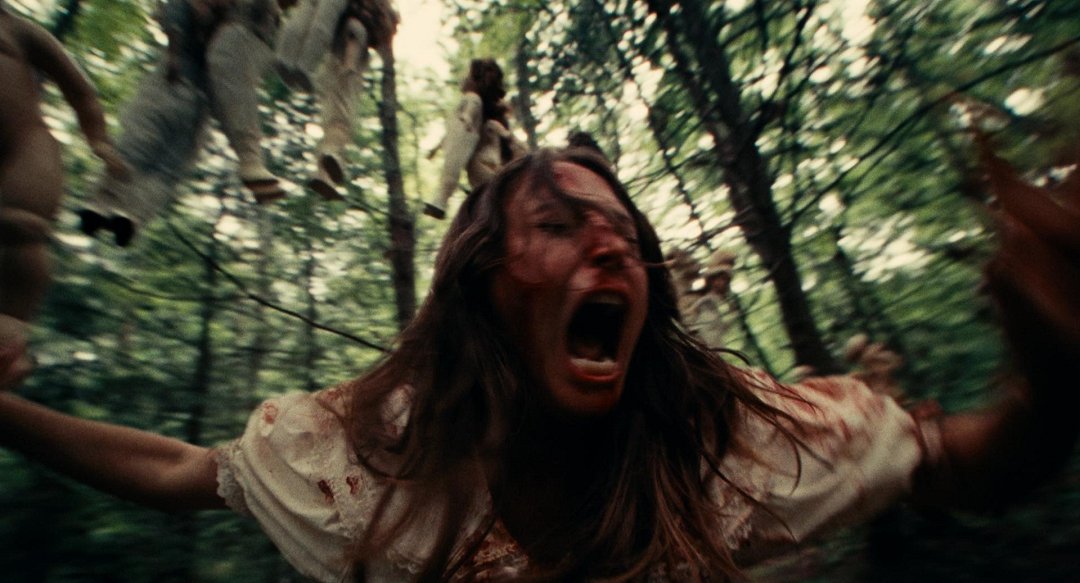
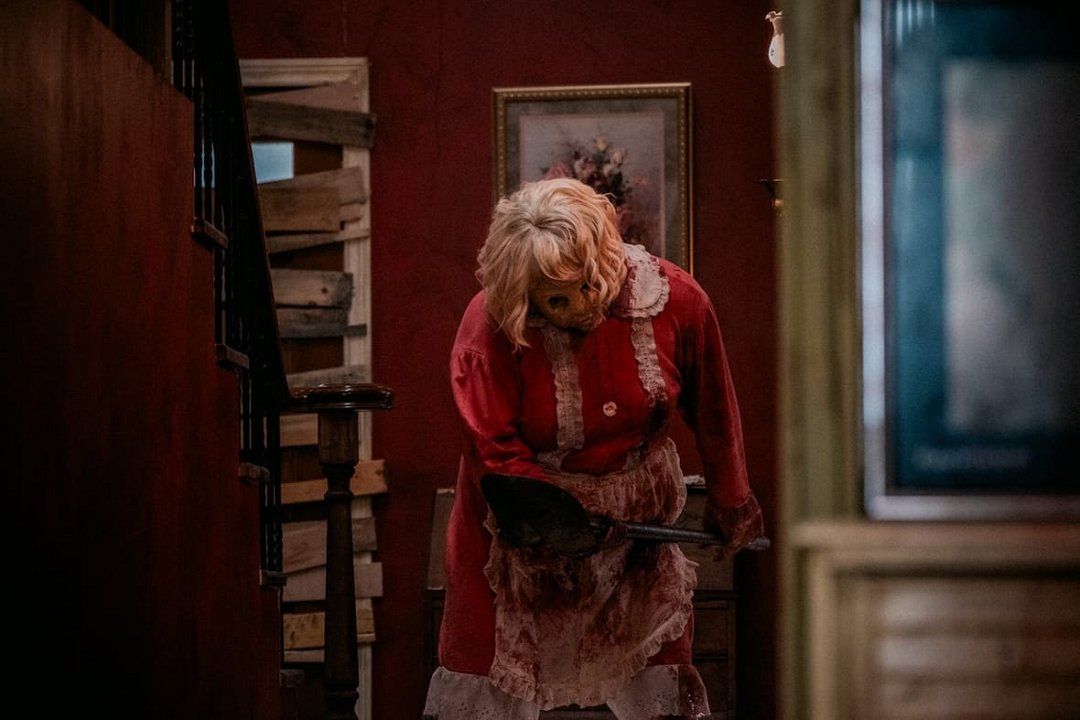
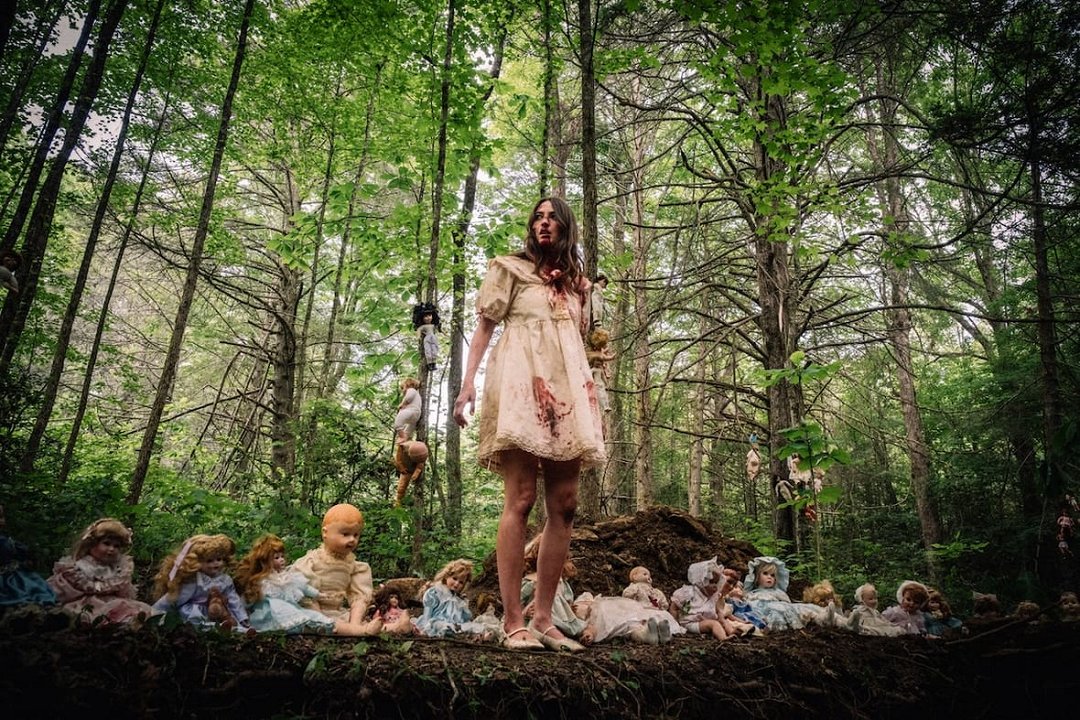
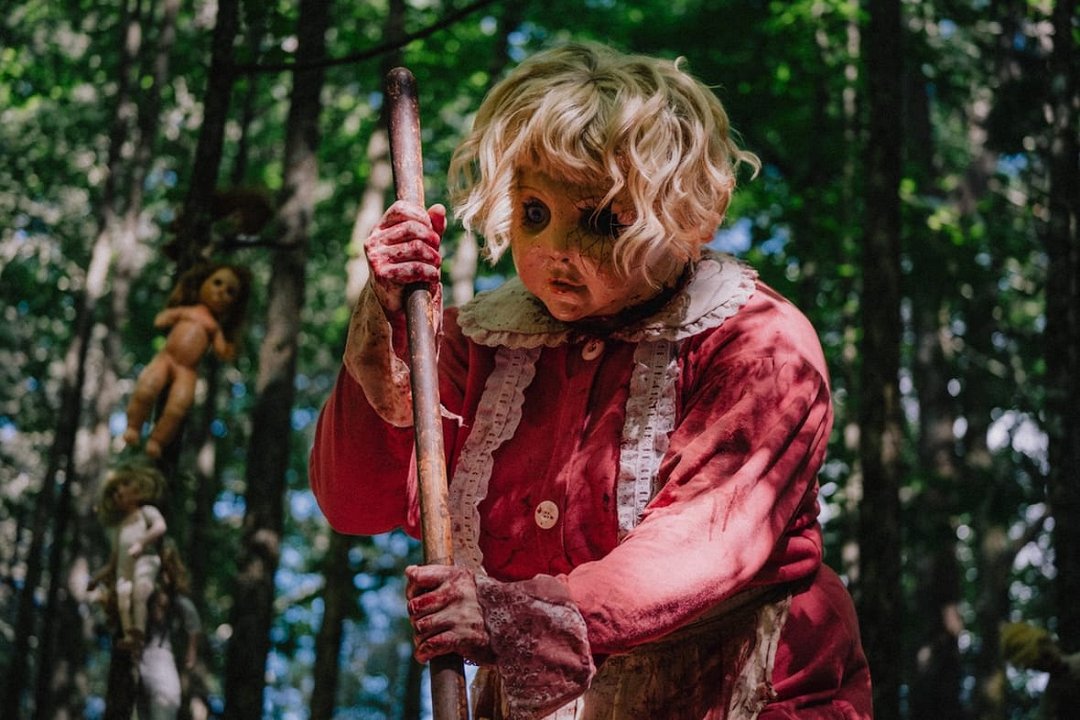
The story follows Macy, a young woman who goes on a hiking trip with her boyfriend Chase. What begins as a romantic getaway quickly turns into a nightmare when they are ambushed by a mysterious figure dressed in a grotesque doll-like mask. The attacker, known as Dolly, is a towering and physically intimidating presence whose behavior oscillates between childlike innocence and horrifying brutality. After the violent encounter, Macy finds herself abducted and trapped in a remote house filled with unsettling dolls and disturbing relics. From that moment on, the film becomes a relentless struggle for survival as Macy tries to escape the twisted intentions of her captor.
One of the most striking aspects of Dolly is its visual style. The film was shot on 16mm film, which gives it a grainy, gritty aesthetic reminiscent of 1970s horror classics. This visual approach immediately evokes films like The Texas Chain Saw Massacre, and the influence is impossible to ignore. The raw cinematography adds a layer of authenticity to the experience, making the violence feel more immediate and uncomfortable. Rather than relying on polished digital visuals, the movie embraces imperfections that enhance the grim atmosphere.
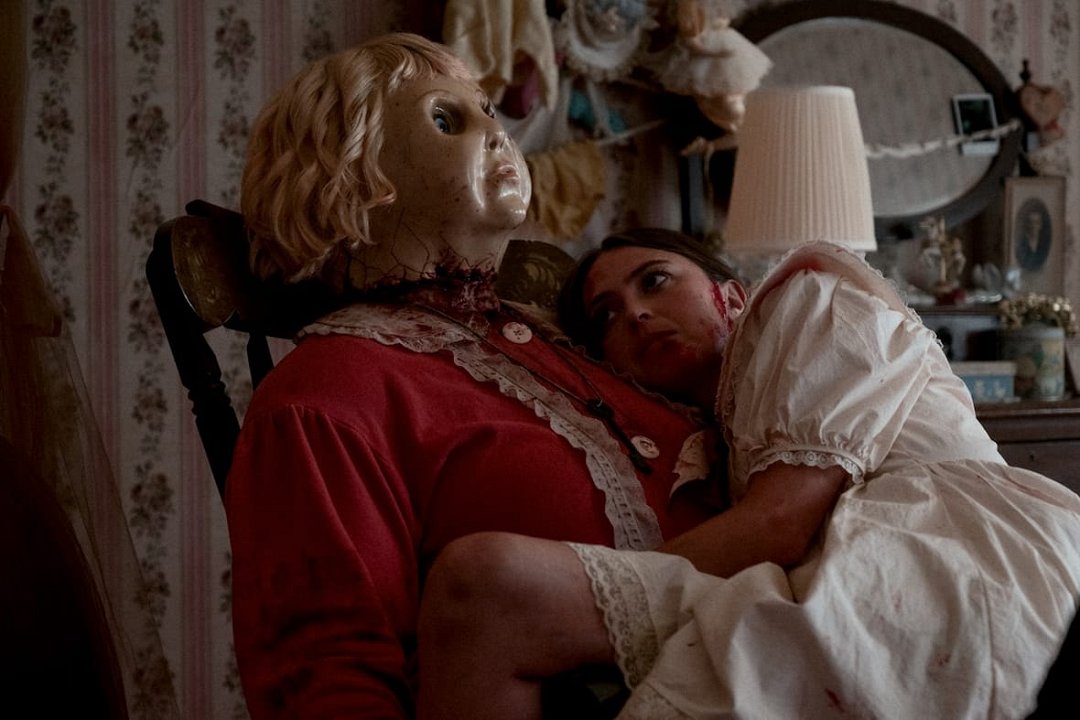
The setting also plays a crucial role in the film’s effectiveness. Much of the story takes place in isolated wooded areas and a strange, cluttered house filled with dolls and disturbing decorations. The environment creates a constant sense of unease. Every room feels dangerous, every shadow hides the possibility of violence, and the audience is never allowed to relax. This claustrophobic setting amplifies the tension and makes Macy’s situation feel hopeless and terrifying.
Performance-wise, the film is led by Fabianne Therese as Macy, who carries most of the emotional weight of the story. Her portrayal of a woman struggling to survive under extreme circumstances is convincing, particularly during the more intense sequences of captivity and escape attempts. She manages to convey both vulnerability and determination, which helps ground the film emotionally despite its extreme violence.
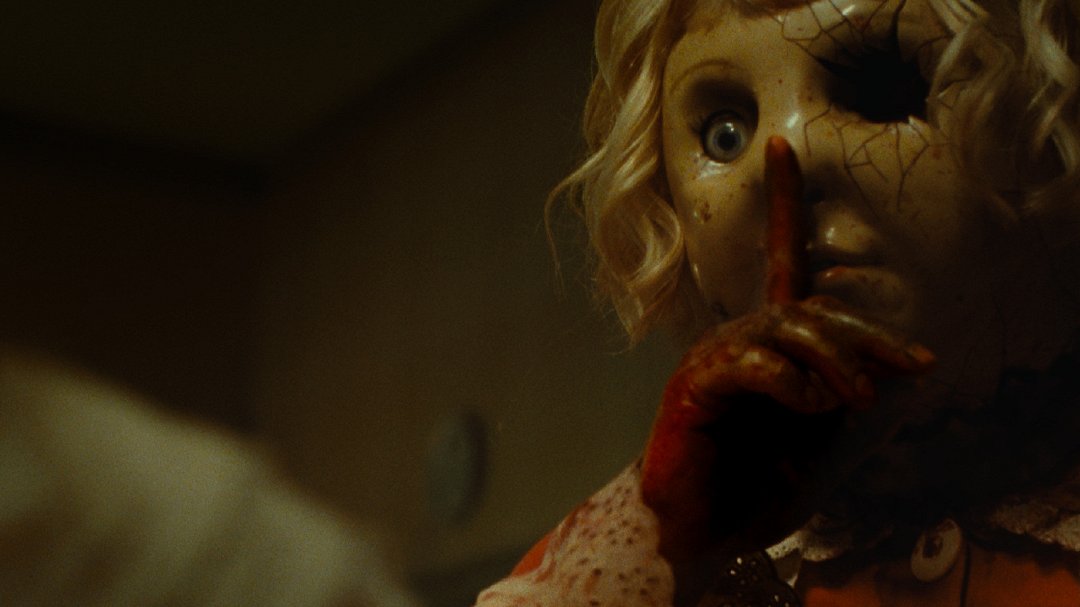
The antagonist, Dolly, portrayed by Max the Impaler, is perhaps the film’s most memorable element. Physically imposing and masked behind a cracked porcelain doll face, the character is both terrifying and strangely tragic. Dolly’s behavior often resembles that of a child playing with toys, yet the consequences of those “games” are horrifyingly real. This unsettling mixture of innocence and cruelty makes the character stand out among modern horror villains. The performance relies heavily on physicality rather than dialogue, and the result is a silent but deeply disturbing presence.
The film does not shy away from extreme violence. In fact, brutality is one of its defining characteristics. Scenes of gore, mutilation, and graphic injury appear throughout the movie, pushing it firmly into the realm of hardcore horror. Some moments are so grotesque that they may be difficult for sensitive viewers to watch. However, for fans of splatter films and grindhouse-style horror, this level of intensity will likely be part of the appeal.
Despite its strengths, Dolly is not without flaws. The film’s plot is relatively simple and sometimes repetitive. Much of the narrative follows a cycle of escape attempts, capture, and confrontation. While this structure maintains tension, it can occasionally feel predictable. Some viewers may also find that the film focuses more on atmosphere and shock value than on deeper character development or storytelling complexity.
Another criticism that can be directed at Dolly is its heavy reliance on genre influences. The film clearly draws inspiration from earlier horror classics, particularly rural slasher films from the 1970s. While this homage can be enjoyable for genre enthusiasts, it also makes the film feel somewhat derivative at times. Instead of forging a completely unique identity, Dolly often feels like a modern reinterpretation of familiar horror tropes.
That said, the movie does attempt to explore themes beneath its violent surface. The twisted relationship between Dolly and Macy suggests disturbing ideas about control, dependency, and the perversion of family dynamics. Dolly’s desire to “raise” Macy as a child adds an uncomfortable psychological layer to the story. It transforms what might otherwise be a straightforward slasher into something more unsettling and psychologically warped.
The film’s pacing also deserves mention. At just over eighty minutes long, Dolly moves quickly and rarely wastes time. The relatively short runtime works in the movie’s favor, preventing the story from dragging too much despite its repetitive elements. The film feels intense and focused, delivering its shocks and suspense without unnecessary filler.
Ultimately, Dolly is a film that will likely divide audiences. For viewers who enjoy polished, mainstream horror with complex narratives, the movie may feel crude and overly brutal. However, for fans of raw, uncompromising horror cinema, Dolly offers exactly what it promises: a disturbing, relentless descent into madness and violence.
In the end, Dolly stands as a modern tribute to the grimy, unsettling horror films of the past. It may not break new ground, but it succeeds in creating a nightmarish atmosphere and an unforgettable villain. With its gritty visuals, brutal violence, and unsettling tone, the film delivers a visceral horror experience that lingers long after the credits roll. Whether viewers see it as a brutal homage or a flawed imitation, one thing is certain: Dolly is not a film that is easily forgotten.
Horror
USA, 2025, 84 min
Director: Rod Blackhurst
Screenplay: Rod Blackhurst, Brandon Weavil
Cinematography: Justin Derry
Music: Nick Bohun
Cast: Fabianne Therese, Seann William Scott, Max the Impaler, Ethan Suplee, Michalina Scorzelli, Kate Cobb
Producers: Rod Blackhurst, Bryce McGuire, Noah Lang, Isaiah Smallman
Editing: Justin Oakey
Production Design: Kyra Boselli